

FOR IMMEDIATE RELEASE
September 9, 2026
Contact: Alix Saba, Executive Director, asaed@africanstudies.org
PDF Press Release for Distribution: Download Here
African Studies Association Announces the 2026 Distinguished Africanist Awardees
PISCATAWAY, New Jersey—The African Studies Association is pleased to announce the awardees of the 2026 Distinguished Africanist Award.
The ASA Distinguished Africanist Award was established in the 1980’s to recognize and honor scholars who have contributed a lifetime record of outstanding scholarship in their respective field of African studies and service to the Africanist community. The 2026 ASA Distinguished Africanist Award will honor the lifework of Edward Alpers (University of California, Los Angeles) and Claire Robertson (Ohio State University).
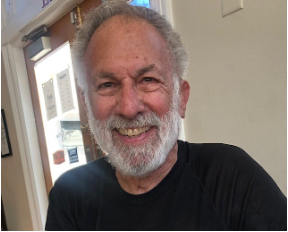
Edward Alpers:
An influential scholar of East Africa from early in his career, Professor Alpers’ pioneering scholarship on the African Diaspora in the Indian Ocean transformed the field. As a prolific author and beloved mentor, he has held noteworthy editorial, administrative, and advisory positions and mentored dozens of scholars over six decades. He, along with several colleagues, helped establish UCLA as one of the top postgraduate programs in African History. The number of awards, grants, and honors he has earned, including his ASA Presidency, are a testament to Professor Alpers’ exceptional reputation and prominence within African Studies and affiliated fields.
Edward A. Alpers is Research Professor (Emeritus) of History at the University of California, Los Angeles. He studied African History at Harvard (1963) and the School of Oriental and African Studies (1966). He taught at the University College of Dar es Salaam, Tanzania (1966-1968), and the Somali National University, Lafoole (1980) as a Fulbright Fellow. In 1994 he served as President of the African Studies Association (USA) and in 2001 as Annual Meeting Program Chair. Alpers has published widely on the history of East Africa and the Indian Ocean. His major publications include Ivory and Slaves in East Central Africa (1975); Africa and the West: A Documentary History from the Slave Trade to Independence, with William H. Worger and Nancy Clark (2001; 2nd ed. 2010); East Africa and the Indian Ocean (2009); The Indian Ocean in World History (2014); and A Primer for Teaching Indian Ocean World History: Ten Design Principles with Thomas F. McDow (2024). His co-edited works include Walter Rodney: Revolutionary and Scholar (1982); History, Memory and Identity (2001; 2nd ed. 2025); Sidis and Scholars: Essays on African Indians (2004); Slavery and Resistance in Africa and Asia (2005); Slave Routes and Oral Tradition in Southeastern Africa (2005); Resisting Bondage in Indian Ocean Africa and Asia (2007); Cross-Currents and Community Networks: The History of the Indian Ocean World (2007); Changing Horizons of African History (2017); Connectivity in Motion: Island Hubs in the Indian Ocean World (2018); Transregional Trade and Traders: Situating Gujarat in the Indian Ocean from Early Times to 1900 (2019); History, Memory and Identity, Comparative Perspectives, vol. 2 (2019). While serving on many editorial boards, he was also a Senior Editor for the Oxford Research Encyclopedia in Asian History (2015-2022) and an Associate Editor for the Oxford Encyclopedia of Slavery, the Slave Trade, and the Diaspora in African History (2026). He was Special Editor of “Slavery and Its Legacies in the Indian Ocean,” Monsoon, Journal of the Indian Ocean Rim (2024) and co-editor of “New Perspectives on Slavery in the Indian Ocean, 1600-1950,” forthcoming in Slavery & Abolition. Professor Alpers served as chair for sixty-two Ph.D. dissertations.
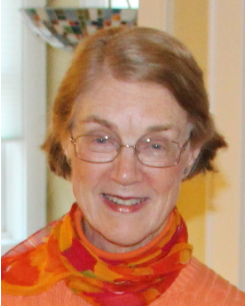
Claire Robertson:
Professor Robertson has been a pioneering and field-defining historian of African and African diasporic women with a career spanning more than five decades. Professor Robertson’s scholarship and publications have had transformative impact on many subfields, including African studies, women, gender and sexuality studies, Caribbean studies, and slavery. Her work is distinguished by methodological breadth and innovation, making key contributions to oral history with a commitment to ethical research and publishing practices. She trained numerous graduate students, mentored countless junior faculty, and helped establish the ASA Women’s Caucus, demonstrating her profound commitment to institution building and community.
Biography: My interest in African Studies was piqued by a sister’s letters from Ghana where my brother-in-law was busy setting up the University law school. Friendship in Madison included several eloquent Biafrans, who explained the intriguing history behind the Biafran War. So I talked with Jan Vansina, eminent UW Africanist, and left his office enrolled in an excellent African History Ph.D. program. I then began the adventures of a lifetime: fieldwork in Ghana, Kenya, St. Lucia and the U.S. But a significant adventure preceded that–my first ASA meeting was in 1969. Beforehand we smuggled a passportless black South African grad student into Canada (and out again later). The Montreal meeting is legendary in ASA lore because the white men who controlled ASA saw to it that neither black nor women scholars appeared on the conference program. So several African and Canadian black organizations sent civil rights demonstrators to interrupt panels. Given that women of any color were excluded, that white men only were discussing black men, and that civil rights demonstrations had deeply influenced me, I sympathized with the demonstrators. This began a lifelong campaign against discrimination, expressed in ASA by being a founder and mentor for the Women’s Caucus. While the Caucus began as a mostly white organization, like ASA, we now reflect the lively diversity of ASA, which might be the most diverse organization in the U.S., membership being about a third African-American, a third scholars born in Africa, and a third white folks of various nationalities. My fieldwork documented African women’s history, the lives of ordinary women and men, women and slavery, urban traders, and related topics like education and genital cutting. We create oral history archives, and donate fieldnotes to archives. History as a discipline offers much freedom: everyone and everything has a history. Ohio State never complained when I switched from Ghana to Kenya and then to Saint Lucia. African and Women’s Studies are deeply interdisciplinary and intertwined. So how could a professional life spent studying African history not involve many adventures and exciting insights? I’m deeply grateful to my welcoming research subjects, my colleagues, and to ASA for this honor.
About the ASA Established in 1957, the African Studies Association is the flagship membership organization devoted to enhancing the exchange of information about Africa. Based in the U.S., the ASA cultivates a holistic understanding of the continent and its diasporas through a globally representative membership. The ASA Annual Meeting fosters interdisciplinary global networks by convening people with scholarly and professional interests in Africa. The organization publishes two leading journals, African Studies Review and History in Africa, and
